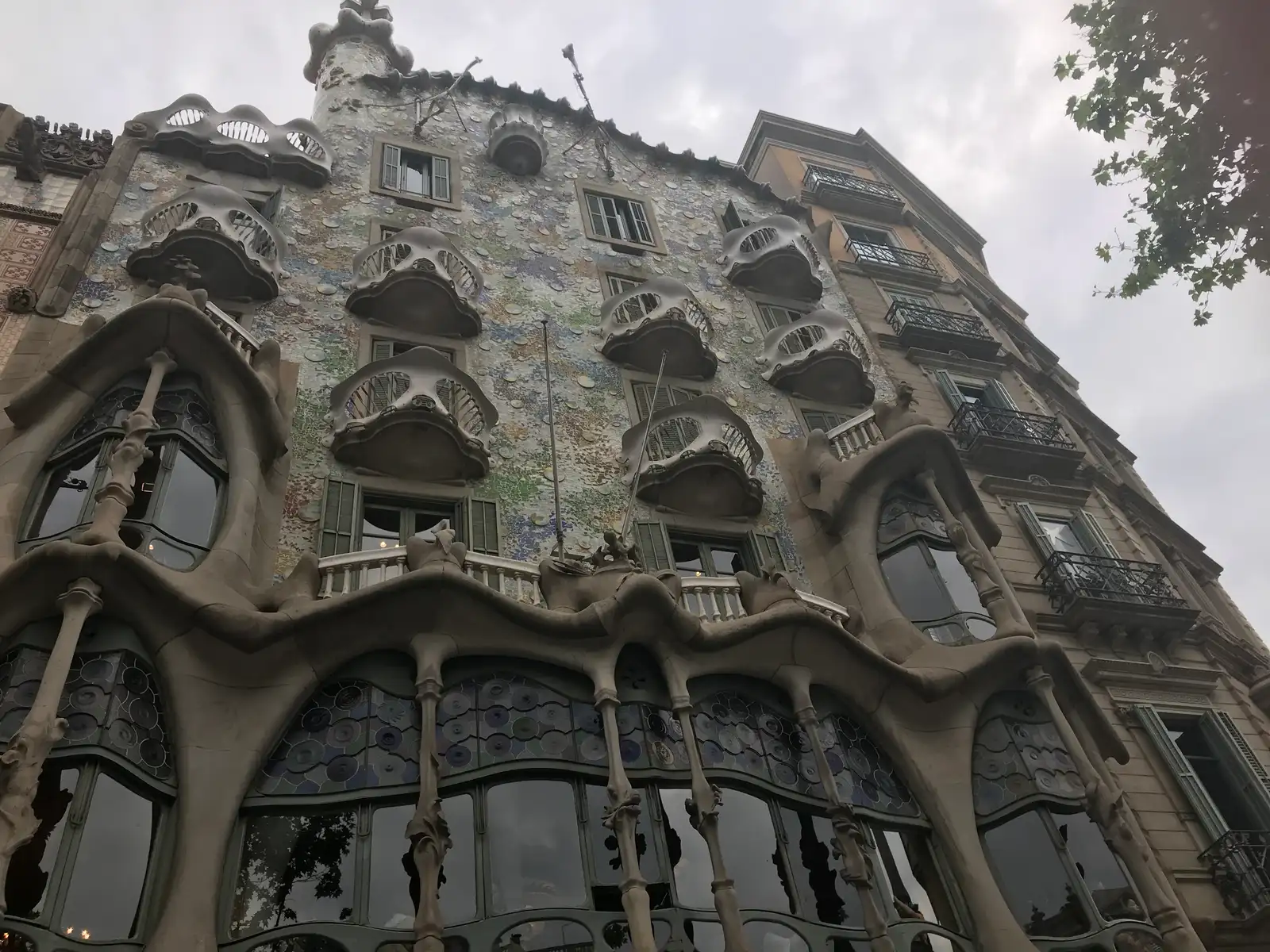
Barcelona - A walk through Modernisme, from Gaudí to his contemporaries
Follow Barcelona's Modernisme movement along Passeig de Gràcia and beyond, with townhouses, a concert hall, a hospital complex and Gaudí's early works.
By the Parkoni editorial team ·
Around the turn of the twentieth century, Barcelona was a wealthy, ambitious city, and its architects wanted buildings that felt new. The result was Modernisme, the Catalan cousin of art nouveau, full of curves, colour, tiles, wrought iron and nature-inspired forms.
Gaudí is the best-known name, but he was not alone. This guide shows how to explore the movement across the city, in a way that works as a relaxed walking tour.
The Eixample and Passeig de Gràcia
Start in the Eixample, the grid-like district built in the nineteenth century. Its broad avenues and chamfered street corners were a canvas for wealthy families who commissioned townhouses. Passeig de Gràcia is the showpiece, and one stretch is nicknamed the Block of Discord because three very different Modernista houses stand side by side. Casa Batlló, with its scaly roof and skull-like balconies, is by Gaudí, while its neighbours are by other architects of the time.
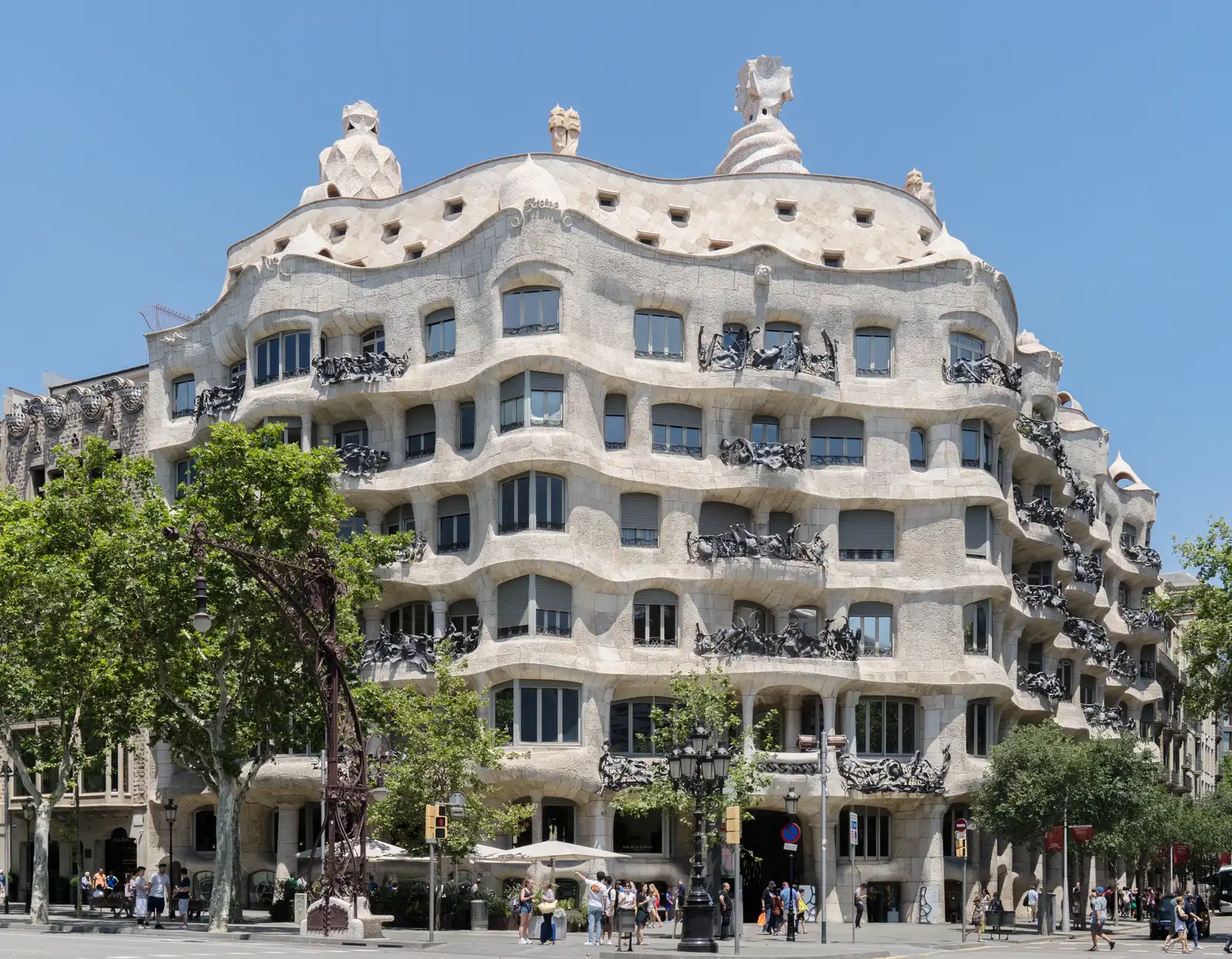
Casa Milà and Gaudí's organic forms
A short walk up the avenue stands Casa Milà, often called La Pedrera, the Quarry. Its wavy stone façade has no straight lines, and the rooftop is crowned with sculptural chimneys. Gaudí wanted buildings to follow nature rather than geometry, and here you see the idea at its boldest. Even if you do not go inside, the façade is worth a pause.
The Palau de la Música Catalana
In the old town, a few streets from the Gothic Quarter, the Palau de la Música Catalana is a concert hall by Lluís Domènech i Montaner. Its façade is covered in mosaics and sculpture, and the interior glows with stained glass. It is a good example of the movement beyond Gaudí, showing colour and craftsmanship at their most joyful.
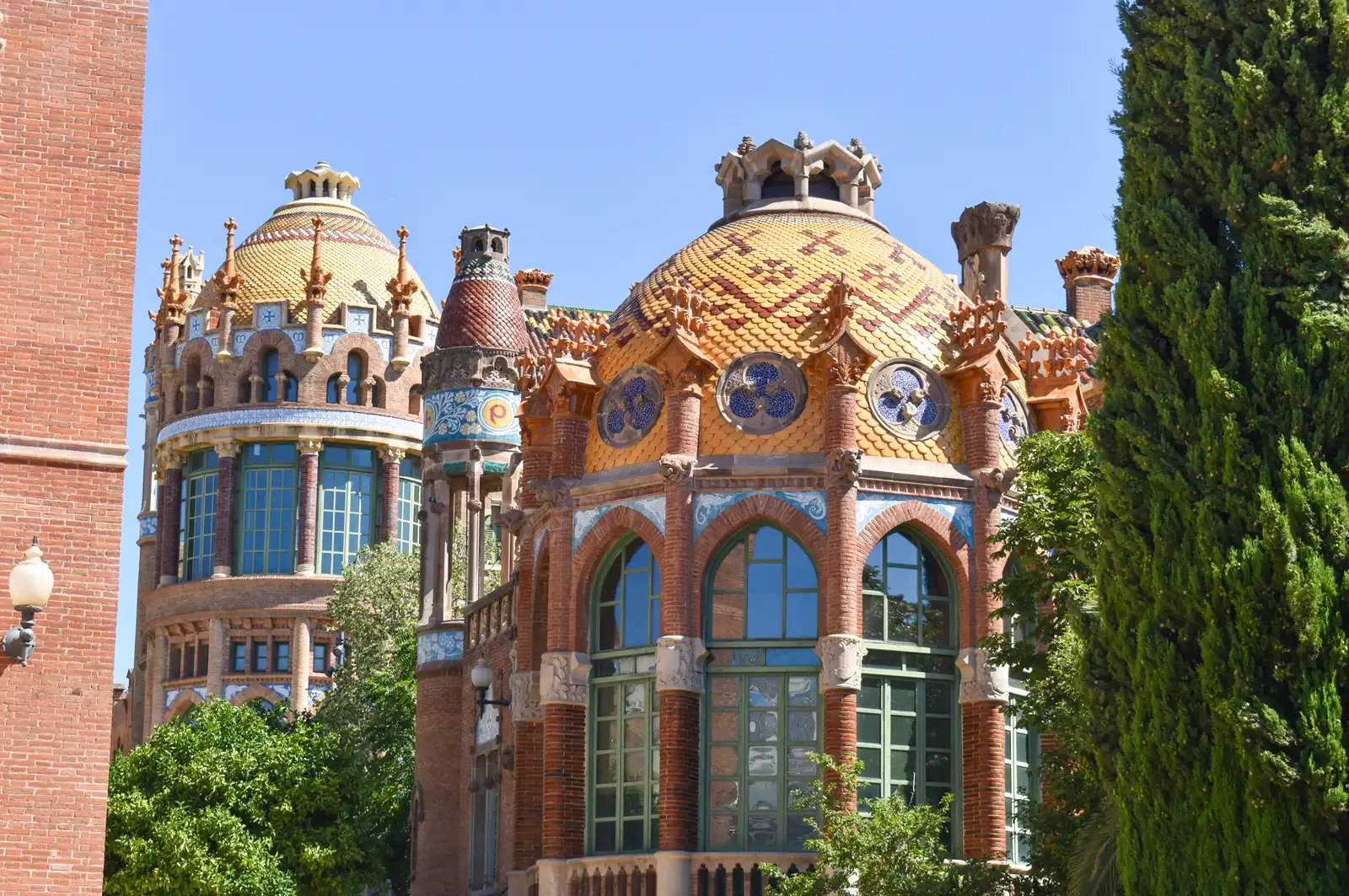
Sant Pau, a hospital like a garden
Domènech i Montaner also designed the Hospital de Sant Pau, a complex of pavilions with tiled roofs, set among gardens and linked by underground passages. It is a UNESCO World Heritage site together with the Palau, and it is far calmer than most central sights. Visiting it is a good way to see Modernisme at a gentle pace.
Gaudí's early and quieter works
If you want more of Gaudí, look at Casa Vicens in the Gràcia district, an early house with bright tiles and Moorish touches. Park Güell and the Sagrada Família remain essential, and the basilica is still being completed, which makes each visit feel part of a long story.
Tips for your walk
- Look up: Roofs, balconies and ironwork carry many of the best details.
- Book ahead: The most famous interiors often need advance tickets.
- Comfortable pace: Combine two or three sights per day, with café stops between.
- Public transport: The metro links most of these places quickly.
A good way to organise the day is to start on Passeig de Gràcia in the morning, walk down towards the old town for lunch and the concert hall, and keep the hospital complex for the afternoon, when the light on the tiles is soft. If you enjoy the style, you will keep spotting small Modernista details across the city, from tiled doorways to ironwork balconies and shop fronts, long after the famous names are behind you.
Barcelona rewards those who look closely at its buildings. Arrange your parking at the departure airport in advance, and you can begin this architectural walk without any rush.
Nonstop to Barcelona
Nonstop flights there leave from these airports, among others: Dublin Airport, Alicante-Elche Miguel Hernández Airport and Almería Airport.
- Dublin Airport (DUB)Aer Lingus, Ryanair, Vueling · year-roundFind parking at this airport
- Alicante-Elche Miguel Hernández Airport (ALC)Vueling · year-roundFind parking at this airport
- Almería Airport (LEI)Iberia, Vueling · year-roundFind parking at this airport
- Amsterdam Airport Schiphol (AMS)KLM, Transavia, Vueling · year-roundFind parking at this airport
- EuroAirport Basel-Mulhouse-Freiburg (BSL)Vueling, easyJet · year-roundFind parking at this airport
- Kraków John Paul II International Airport (KRK)LOT Polish Airlines, Ryanair, Wizz Air · year-roundFind parking at this airport
74 more departure airports
- Bari Karol Wojtyła International Airport (BRI)Vueling · year-roundFind parking at this airport
- Beauvais-Tillé airport (BVA)Ryanair · year-roundFind parking at this airport
- Berlin Brandenburg Airport (BER)Ryanair, Vueling, easyJet · year-roundFind parking at this airport
- Bilbao Airport (BIO)Vueling · year-roundFind parking at this airport
- Bologna Guglielmo Marconi Airport (BLQ)Ryanair, Vueling · year-roundFind parking at this airport
- Bordeaux-Mérignac Airport (BOD)Volotea, Vueling · year-roundFind parking at this airport
- M. R. Štefánik Airport (BTS)Ryanair, Wizz Air · year-roundFind parking at this airport
- Budapest Liszt Ferenc International Airport (BUD)Ryanair, Wizz Air · year-roundFind parking at this airport
- Cagliari Elmas Airport (CAG)Vueling · year-roundFind parking at this airport
- Turin Airport (TRN)Ryanair, Vueling, Wizz Air · year-roundFind parking at this airport
- Catania-Fontanarossa Airport (CTA)Vueling · year-roundFind parking at this airport
- Brussels South Charleroi Airport (CRL)Ryanair · year-roundFind parking at this airport
- Avram Iancu Cluj International Airport (CLJ)Wizz Air · year-roundFind parking at this airport
- Lyon Saint-Exupéry Airport (LYS)Vueling, easyJet · year-roundFind parking at this airport
- Region of Murcia International Airport (RMU)Volotea · year-roundFind parking at this airport
- Düsseldorf Airport (DUS)Eurowings, Vueling · year-roundFind parking at this airport
- Eindhoven Airport (EIN)Ryanair, Transavia · year-roundFind parking at this airport
- Milan Malpensa International Airport (MXP)Ryanair, Vueling, Wizz Air, easyJet · year-roundFind parking at this airport
- Florence Airport, Peretola (FLR)Vueling · year-roundFind parking at this airport
- Frankfurt Main Airport (FRA)Condor, Lufthansa · year-roundFind parking at this airport
- Gdańsk Lech Wałęsa Airport (GDN)Ryanair, Wizz Air · year-roundFind parking at this airport
- Genoa Cristoforo Colombo Airport (GOA)Vueling · year-roundFind parking at this airport
- Hamburg Helmut Schmidt Airport (HAM)Eurowings, Vueling · year-roundFind parking at this airport
- Hannover Airport (HAJ)Vueling · year-roundFind parking at this airport
- Helsinki Vantaa Airport (HEL)Finnair · year-roundFind parking at this airport
- Ibiza Airport (IBZ)Ryanair, Vueling · year-roundFind parking at this airport
- Katowice Wojciech Korfanty International Airport (KTW)Wizz Air · year-roundFind parking at this airport
- Cologne Bonn Airport (CGN)Eurowings, Ryanair · year-roundFind parking at this airport
- Larnaca International Airport (LCA)Cyprus Airways, Wizz Air · year-roundFind parking at this airport
- Lille Airport (LIL)Volotea · year-roundFind parking at this airport
- Lisbon Humberto Delgado Airport (LIS)Ryanair, TAP Air Portugal, Vueling, easyJet · year-roundFind parking at this airport
- Adolfo Suárez Madrid-Barajas Airport (MAD)Air Europa, Iberia · year-roundFind parking at this airport
- Málaga-Costa del Sol Airport (AGP)Ryanair, Vueling · year-roundFind parking at this airport
- Marseille Provence Airport (MRS)Volotea, Vueling · year-roundFind parking at this airport
- Munich Airport (MUC)Lufthansa, Lufthansa City Airlines · year-roundFind parking at this airport
- Nantes Atlantique Airport (NTE)Volotea, Vueling · year-roundFind parking at this airport
- Naples International Airport (NAP)Ryanair, Vueling, Wizz Air, easyJet · year-roundFind parking at this airport
- Warsaw Modlin Airport (WMI)Ryanair, Wizz Air · year-roundFind parking at this airport
- Nuremberg Airport (NUE)Vueling · year-roundFind parking at this airport
- Il Caravaggio International Airport (BGY)Ryanair · year-roundFind parking at this airport
- Bucharest Henri Coandă International Airport (OTP)Wizz Air · year-roundFind parking at this airport
- Falcone-Borsellino Airport (PMO)Ryanair, Vueling, Wizz Air · year-roundFind parking at this airport
- Palma de Mallorca Airport (PMI)Air Europa, Ryanair, Vueling · year-roundFind parking at this airport
- Paris-Orly Airport (ORY)Transavia, Vueling · year-roundFind parking at this airport
- Charles de Gaulle International Airport (CDG)Air France, Vueling · year-roundFind parking at this airport
- Francisco de Sá Carneiro Airport (OPO)Ryanair, Vueling · year-roundFind parking at this airport
- Václav Havel Airport Prague (PRG)Eurowings, Ryanair, Smartwings, Vueling · year-roundFind parking at this airport
- Reggio Calabria Airport (REG)Ryanair · year-roundFind parking at this airport
- Rome-Fiumicino Leonardo da Vinci International Airport (FCO)ITA Airways, Ryanair, Vueling, Wizz Air · year-roundFind parking at this airport
- Rotterdam The Hague Airport (RTM)Transavia · year-roundFind parking at this airport
- Salzburg Airport (SZG)EasyJet, Eurowings · year-roundFind parking at this airport
- Santiago-Rosalía de Castro Airport (SCQ)Ryanair, Vueling · year-roundFind parking at this airport
- Milano Linate Airport (LIN)easyJet · year-roundFind parking at this airport
- Seville Airport (SVQ)Ryanair, Vueling · year-roundFind parking at this airport
- Sofia Airport (SOF)Bulgaria Air, Ryanair, Wizz Air · year-roundFind parking at this airport
- Athens Eleftherios Venizelos International Airport (ATH)Aegean Airlines, Sky Express, Vueling · year-roundFind parking at this airport
- Stockholm-Arlanda Airport (ARN)Norwegian Air Shuttle, Ryanair, Scandinavian Airlines, Vueling · year-roundFind parking at this airport
- Stuttgart Airport (STR)Eurowings, Vueling · year-roundFind parking at this airport
- Timișoara Traian Vuia International Airport (TSR)Wizz Air · year-roundFind parking at this airport
- Zagreb Franjo Tuđman International Airport (ZAG)Croatia Airlines · year-roundFind parking at this airport
- Venice Marco Polo Airport (VCE)Ryanair, Vueling, Wizz Air · year-roundFind parking at this airport
- Vienna International Airport (VIE)Austrian Airlines, Ryanair, Vueling · year-roundFind parking at this airport
- Vilnius International Airport (VNO)Ryanair, Wizz Air · year-roundFind parking at this airport
- Warsaw Chopin Airport (WAW)Wizz Air · year-roundFind parking at this airport
- Copernicus Wrocław Airport (WRO)Wizz Air · year-roundFind parking at this airport
- Brussels Airport (BRU)Brussels Airlines, Ryanair, Vueling · year-roundFind parking at this airport
- Ljubljana Jože Pučnik Airport (LJU)Vueling · year-roundFind parking at this airport
- Alghero-Fertilia Airport (AHO)Ryanair · seasonalFind parking at this airport
- Billund Airport (BLL)Norwegian Air Shuttle · seasonalFind parking at this airport
- Verona Villafranca Valerio Catullo Airport (VRN)Volotea · seasonalFind parking at this airport
- Faro - Gago Coutinho International Airport (FAO)Ryanair · seasonalFind parking at this airport
- Frankfurt-Hahn Airport (HHN)Ryanair · seasonalFind parking at this airport
- Olbia Costa Smeralda Airport (OLB)Volotea, Vueling · seasonalFind parking at this airport
- Split Saint Jerome Airport (SPU)Vueling · seasonalFind parking at this airport
Routes as listed on Wikipedia from the airlines' schedules; the airline's current timetable is authoritative.