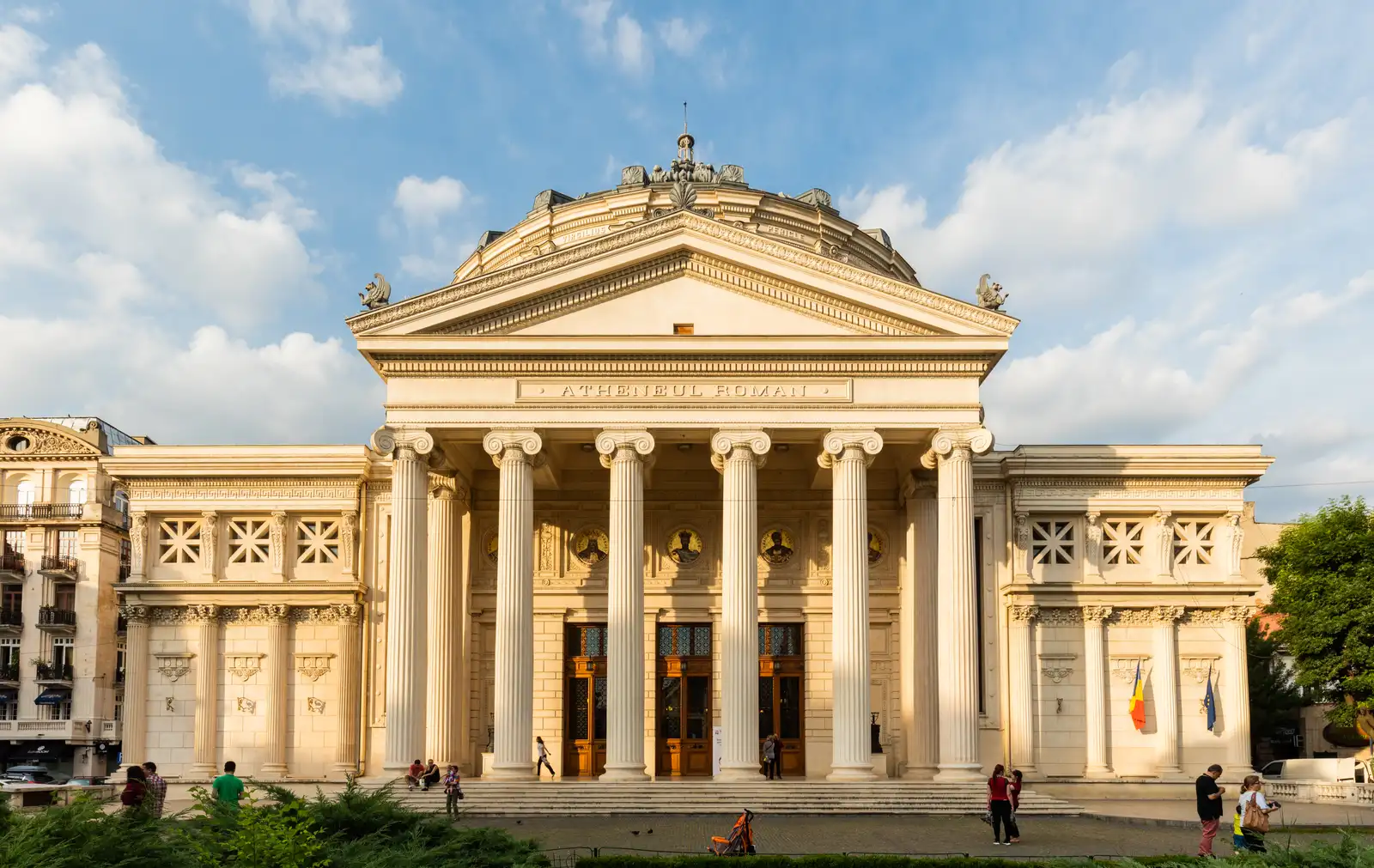
Photo: Diego Delso, CC BY-SA 4.0
Bucharest - An Architecture Walk Through the Little Paris of the East
Belle Époque grandeur, Brâncoveanu churches and bold modernism: a relaxed architecture walk through Bucharest, from Calea Victoriei to quiet back courtyards.
By the Parkoni editorial team ·
At first glance, Bucharest looks like a patchwork of eras, and that is exactly its charm. Grand nineteenth-century facades stand beside tiny churches, modernist apartment blocks and monumental buildings from a later age. If you walk with your eyes open, you can read the story of the city in its buildings.
The capital was once nicknamed "Little Paris" for its elegant boulevards and cafés. This article takes you on a relaxed walk through its most interesting building styles, with no rush and plenty of pauses in green spaces.
Calea Victoriei: the grand avenue
Calea Victoriei is perhaps the best-known street in the city and a good place to start. It runs roughly north to south and packs several eras into a few kilometres. Along it you will see town palaces, banks, theatres and museums, many in the style of French historicism.
- Romanian Athenaeum: The round concert hall with its dome is among the most beautiful buildings in the city and a symbol of Romanian culture.
- CEC Palace: The former savings bank, with its glass dome, is easy to spot from a distance.
- Revolution Square: This wide square recalls the events of 1989 and is framed by important buildings.
The old town and its quiet churches
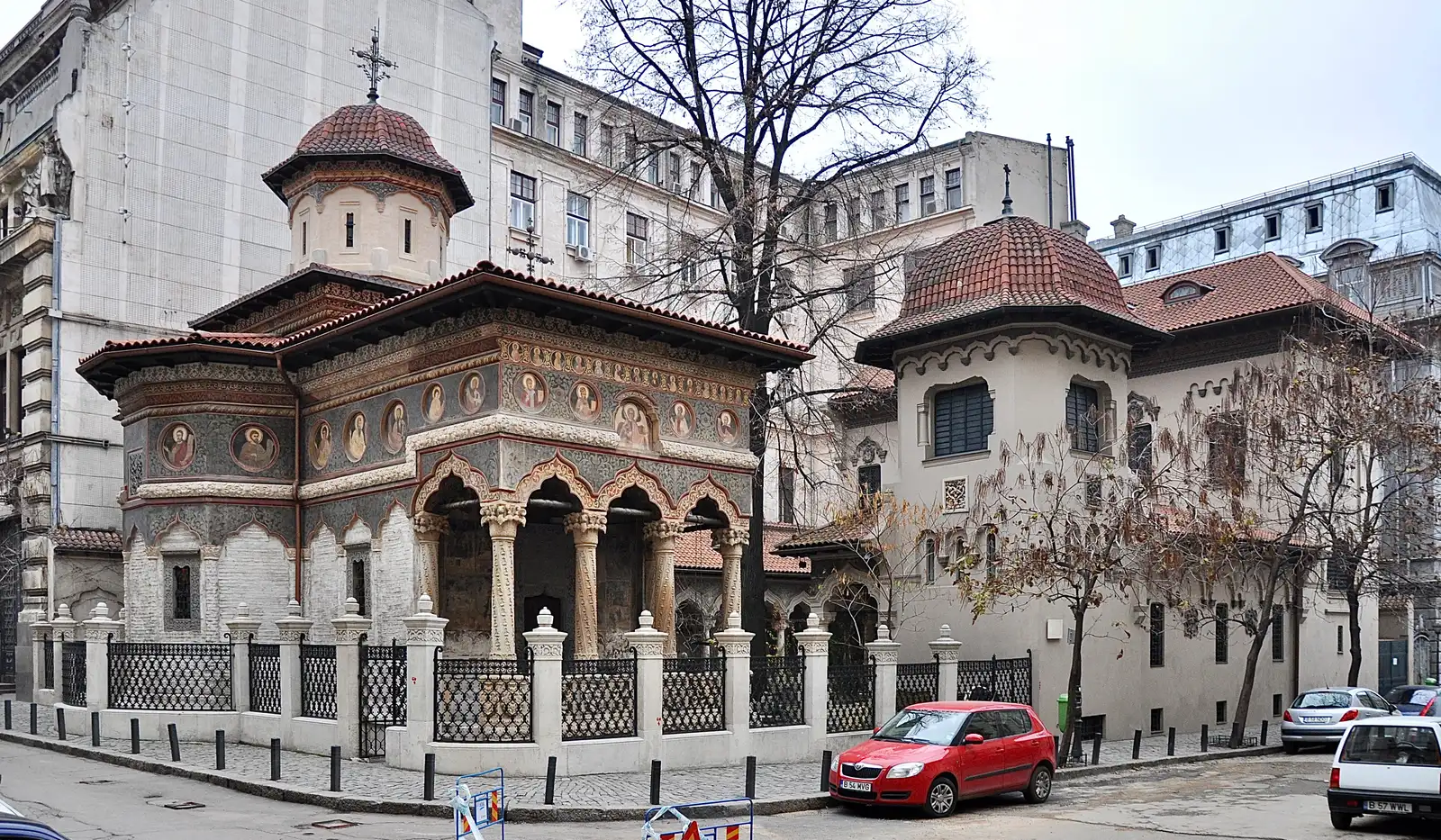
In the Lipscani district, narrow lanes wind between restored houses and courtyards. Tucked among them are churches that can seem almost unremarkable at first. Stavropoleos Church is a lovely example: small and delicate, with fine stone carving and a little courtyard that stays peaceful even on busy days. It stands for the Brâncoveanu style, a Romanian take on late Renaissance and Baroque design, full of ornament and carved columns.
If you follow the lanes, you will also find traces of the old princely town. For centuries Bucharest was the seat of the rulers of Wallachia, and some of that heritage can still be seen in the old centre.
Between the wars: modernism and Art Deco
Between the two world wars, Bucharest grew quickly and many apartment buildings went up in a modern style. Around the big boulevards you will find buildings with clean lines, rounded balconies and Art Deco details. They are often less famous than the palaces, yet they shape the look of the city. A stroll through the residential districts north of the centre is especially rewarding if you like to see architecture in everyday life.
Look at entrances, stairwells and wrought-iron railings. Many buildings have been carefully restored in recent years, while others are still waiting their turn. That mix is part of what makes the walk so interesting.
Monumental buildings and the legacy of history
The Palace of the Parliament is one of the largest administrative buildings in the world. It dominates the centre of the city and is impressive even from the outside. The broad boulevard leading up to it shows how much the city was reshaped in the twentieth century.
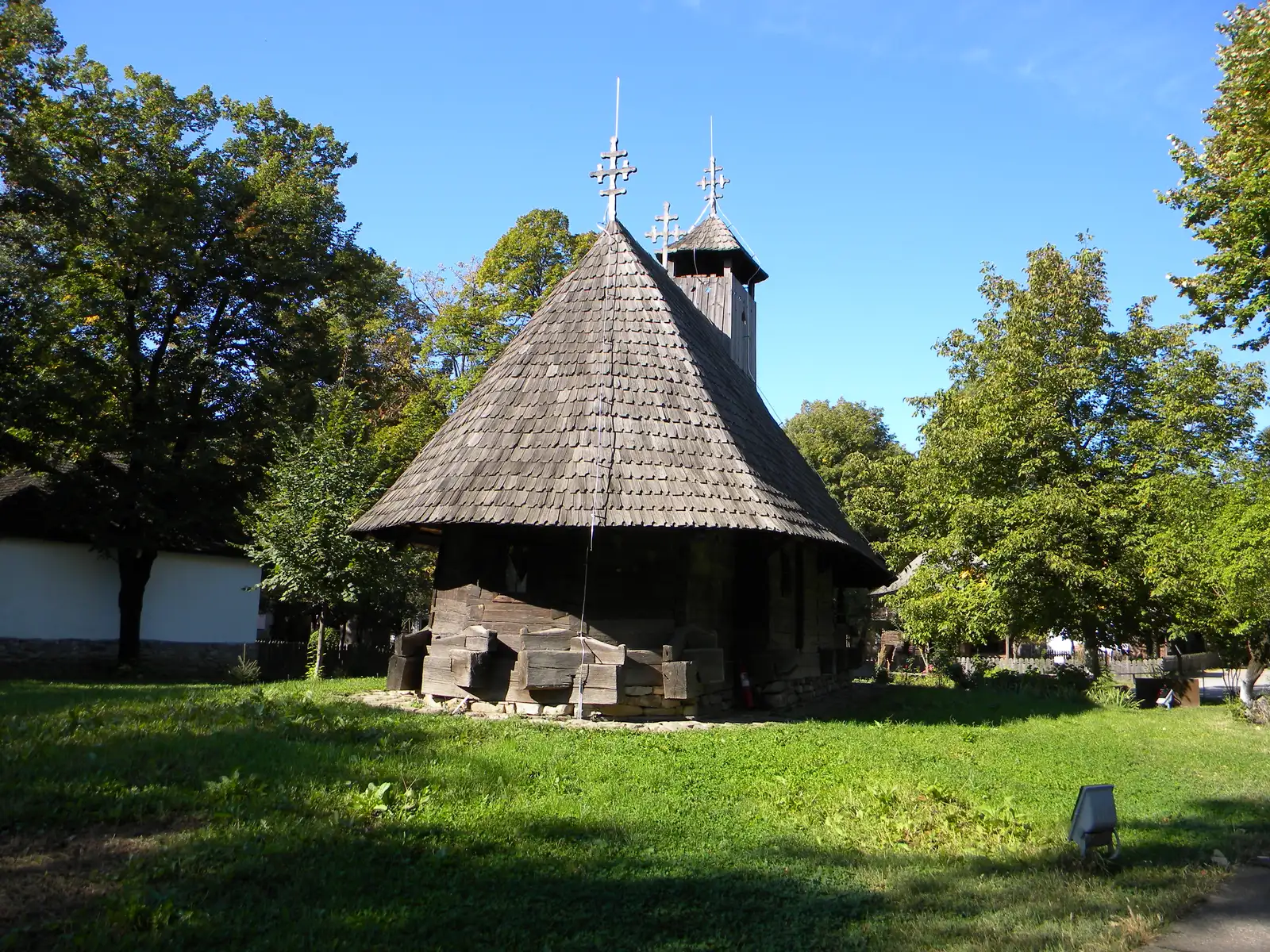
A striking contrast is the open-air Village Museum by Herăstrău Park, where farmhouses, wooden churches and windmills from across Romania have been gathered. It lets you see how people built in the countryside and compare it with the city.
Green breaks along the way
Between the buildings, you will want room to breathe. Cișmigiu Garden in the centre is a classic spot, with a lake, tree-lined paths and shady benches. In summer people play chess here, and in autumn the trees turn gold. Herăstrău Park by the lake is also a pleasant place for a longer rest.
- Wear comfortable shoes, as pavements are not even everywhere.
- Look up: the most beautiful details are often above the shop windows.
- Allow half a day for the walk and leave time for a coffee.
Bucharest rewards curiosity. Take your time and you will find a new chapter of the city's story around every corner, and you will head home with plenty of memories.
Nonstop to Bucharest
Nonstop flights there leave from these airports, among others: Dublin Airport, Alghero-Fertilia Airport and Alicante-Elche Miguel Hernández Airport.
- Dublin Airport (DUB)Dan Air, HiSky, Ryanair · year-roundFind parking at this airport
- Alghero-Fertilia Airport (AHO)Wizz Air · year-roundFind parking at this airport
- Alicante-Elche Miguel Hernández Airport (ALC)Wizz Air · year-roundFind parking at this airport
- Almería Airport (LEI)Wizz Air · year-roundFind parking at this airport
- Amsterdam Airport Schiphol (AMS)KLM · year-roundFind parking at this airport
- Josep Tarradellas Barcelona-El Prat Airport (BCN)FlyOne, HiSky, Wizz Air · year-roundFind parking at this airport
56 more departure airports
- Bari Karol Wojtyła International Airport (BRI)Wizz Air · year-roundFind parking at this airport
- Beauvais-Tillé airport (BVA)Ryanair, Wizz Air · year-roundFind parking at this airport
- Berlin Brandenburg Airport (BER)Ryanair, Wizz Air · year-roundFind parking at this airport
- Billund Airport (BLL)Wizz Air · year-roundFind parking at this airport
- Bologna Guglielmo Marconi Airport (BLQ)Ryanair, Wizz Air · year-roundFind parking at this airport
- Bordeaux-Mérignac Airport (BOD)Wizz Air · year-roundFind parking at this airport
- Brindisi Airport (BDS)Wizz Air · year-roundFind parking at this airport
- Budapest Liszt Ferenc International Airport (BUD)TAROM · year-roundFind parking at this airport
- Turin Airport (TRN)Wizz Air · year-roundFind parking at this airport
- Catania-Fontanarossa Airport (CTA)Ryanair, Wizz Air · year-roundFind parking at this airport
- Brussels South Charleroi Airport (CRL)Ryanair, Wizz Air · year-roundFind parking at this airport
- Avram Iancu Cluj International Airport (CLJ)Animawings, HiSky, TAROM · year-roundFind parking at this airport
- Lyon Saint-Exupéry Airport (LYS)Wizz Air · year-roundFind parking at this airport
- Dortmund Airport (DTM)Wizz Air · year-roundFind parking at this airport
- Düsseldorf Airport (DUS)Eurowings · year-roundFind parking at this airport
- Eindhoven Airport (EIN)Wizz Air · year-roundFind parking at this airport
- Milan Malpensa International Airport (MXP)Ryanair, Wizz Air · year-roundFind parking at this airport
- Frankfurt Main Airport (FRA)FlyOne, HiSky, Lufthansa, TAROM · year-roundFind parking at this airport
- Gdańsk Lech Wałęsa Airport (GDN)Ryanair, Wizz Air · year-roundFind parking at this airport
- Cologne Bonn Airport (CGN)Wizz Air · year-roundFind parking at this airport
- Lamezia Terme Sant'Eufemia International Airport (SUF)Ryanair · year-roundFind parking at this airport
- Larnaca International Airport (LCA)Animawings, Dan Air, Wizz Air · year-roundFind parking at this airport
- Lisbon Humberto Delgado Airport (LIS)Wizz Air · year-roundFind parking at this airport
- Adolfo Suárez Madrid-Barajas Airport (MAD)FlyOne, Iberia, Ryanair, Wizz Air · year-roundFind parking at this airport
- Málaga-Costa del Sol Airport (AGP)Ryanair, Wizz Air · year-roundFind parking at this airport
- Marseille Provence Airport (MRS)Ryanair · year-roundFind parking at this airport
- Munich Airport (MUC)Lufthansa City Airlines · year-roundFind parking at this airport
- Naples International Airport (NAP)Ryanair · year-roundFind parking at this airport
- Nuremberg Airport (NUE)Wizz Air · year-roundFind parking at this airport
- Il Caravaggio International Airport (BGY)Ryanair, Wizz Air · year-roundFind parking at this airport
- Charles de Gaulle International Airport (CDG)Air France, Animawings, FlyOne, HiSky, TAROM · year-roundFind parking at this airport
- Abruzzo Airport (PSR)Ryanair · year-roundFind parking at this airport
- Pisa International Airport (PSA)Ryanair, Wizz Air · year-roundFind parking at this airport
- Francisco de Sá Carneiro Airport (OPO)Wizz Air · year-roundFind parking at this airport
- Václav Havel Airport Prague (PRG)Animawings, Smartwings, TAROM, Wizz Air · year-roundFind parking at this airport
- Ciampino-G. B. Pastine International Airport (CIA)Ryanair · year-roundFind parking at this airport
- Rome-Fiumicino Leonardo da Vinci International Airport (FCO)Wizz Air · year-roundFind parking at this airport
- Rotterdam The Hague Airport (RTM)Animawings · year-roundFind parking at this airport
- Seville Airport (SVQ)Wizz Air · year-roundFind parking at this airport
- Sofia Airport (SOF)TAROM · year-roundFind parking at this airport
- Athens Eleftherios Venizelos International Airport (ATH)Aegean Airlines, TAROM · year-roundFind parking at this airport
- Stockholm-Arlanda Airport (ARN)Animawings, Norwegian Air Shuttle · year-roundFind parking at this airport
- Stuttgart Airport (STR)Eurowings, Wizz Air · year-roundFind parking at this airport
- Timișoara Traian Vuia International Airport (TSR)Animawings, HiSky, TAROM · year-roundFind parking at this airport
- Treviso Airport (TSF)Ryanair, Wizz Air · year-roundFind parking at this airport
- Valencia Airport (VLC)Dan Air, Wizz Air · year-roundFind parking at this airport
- Zagreb Franjo Tuđman International Airport (ZAG)Air China · year-roundFind parking at this airport
- Vienna International Airport (VIE)Austrian Airlines, Ryanair · year-roundFind parking at this airport
- Warsaw Chopin Airport (WAW)LOT Polish Airlines · year-roundFind parking at this airport
- Brussels Airport (BRU)FlyOne, HiSky, TAROM · year-roundFind parking at this airport
- Faro - Gago Coutinho International Airport (FAO)Animawings, Wizz Air · seasonalFind parking at this airport
- Genoa Cristoforo Colombo Airport (GOA)Ryanair · seasonalFind parking at this airport
- Ibiza Airport (IBZ)Animawings · seasonalFind parking at this airport
- Nice-Côte d'Azur Airport (NCE)Animawings · seasonalFind parking at this airport
- Falcone-Borsellino Airport (PMO)Ryanair · seasonalFind parking at this airport
- Palma de Mallorca Airport (PMI)Animawings, Ryanair · seasonalFind parking at this airport
Routes as listed on Wikipedia from the airlines' schedules; the airline's current timetable is authoritative.