Photo: Benjamin Smith, CC BY-SA 4.0
Seville - The city's neighbourhoods and how to enjoy them
Santa Cruz, Triana, Arenal and Alameda: each of Seville's neighbourhoods has its own character. A walking overview for your city break in the south of Spain.
By the Parkoni editorial team ·
Seville is made up of neighbourhoods that differ clearly in mood and pace. In a city that is so easy to explore on foot, that is a gift: within a few steps you move from the bustle around the cathedral to quiet lanes with orange trees.
This overview helps you make sense of the city. It works for a day as well as for a long weekend, and most distances are short.
Santa Cruz
The former Jewish quarter lies right beside the cathedral and the Alcázar. White houses, wrought-iron grilles and flowers in courtyards shape the winding lanes. It is loveliest early in the morning or in the evening, when the day trippers have gone.
Seville is the capital of Andalusia and lies on the Guadalquivir, which linked the city with the world for centuries. Ships sailed from here to the New World, and that shaped trade, buildings and character. The old town is one of the largest in Spain and is surprisingly easy to explore on foot. Lanes are often narrow and shady, which is a blessing in summer. If you take the districts one after another, you experience the city as a mosaic of moods that only shows its picture as a whole.
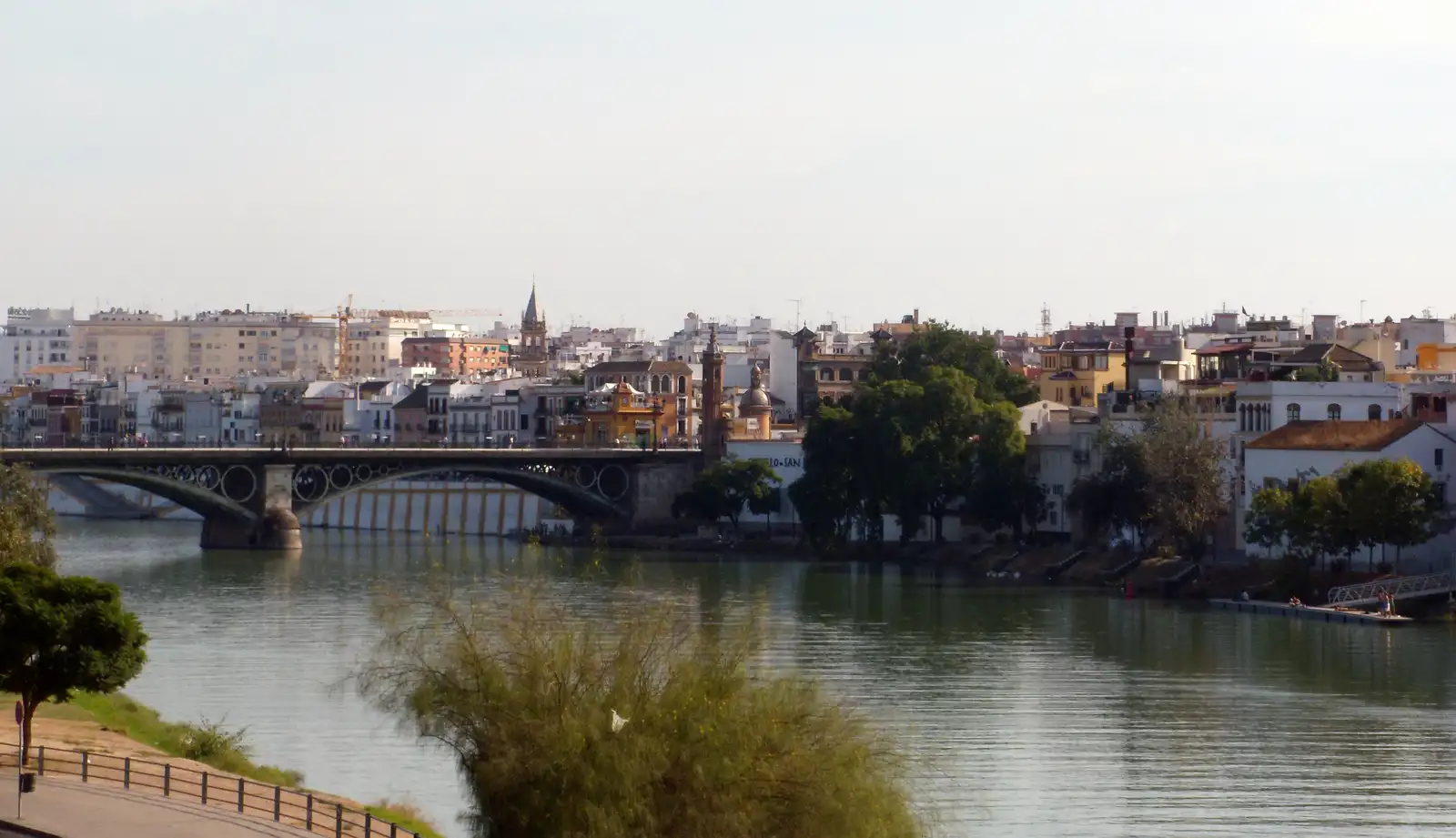
Triana across the river
- Location: The district lies on the west bank of the Guadalquivir, reached via the Isabel II bridge.
- Tradition: Triana is famous for its ceramics and flamenco history.
- Riverside: The promenade by the water is a favourite for an evening walk.
Arenal and the river
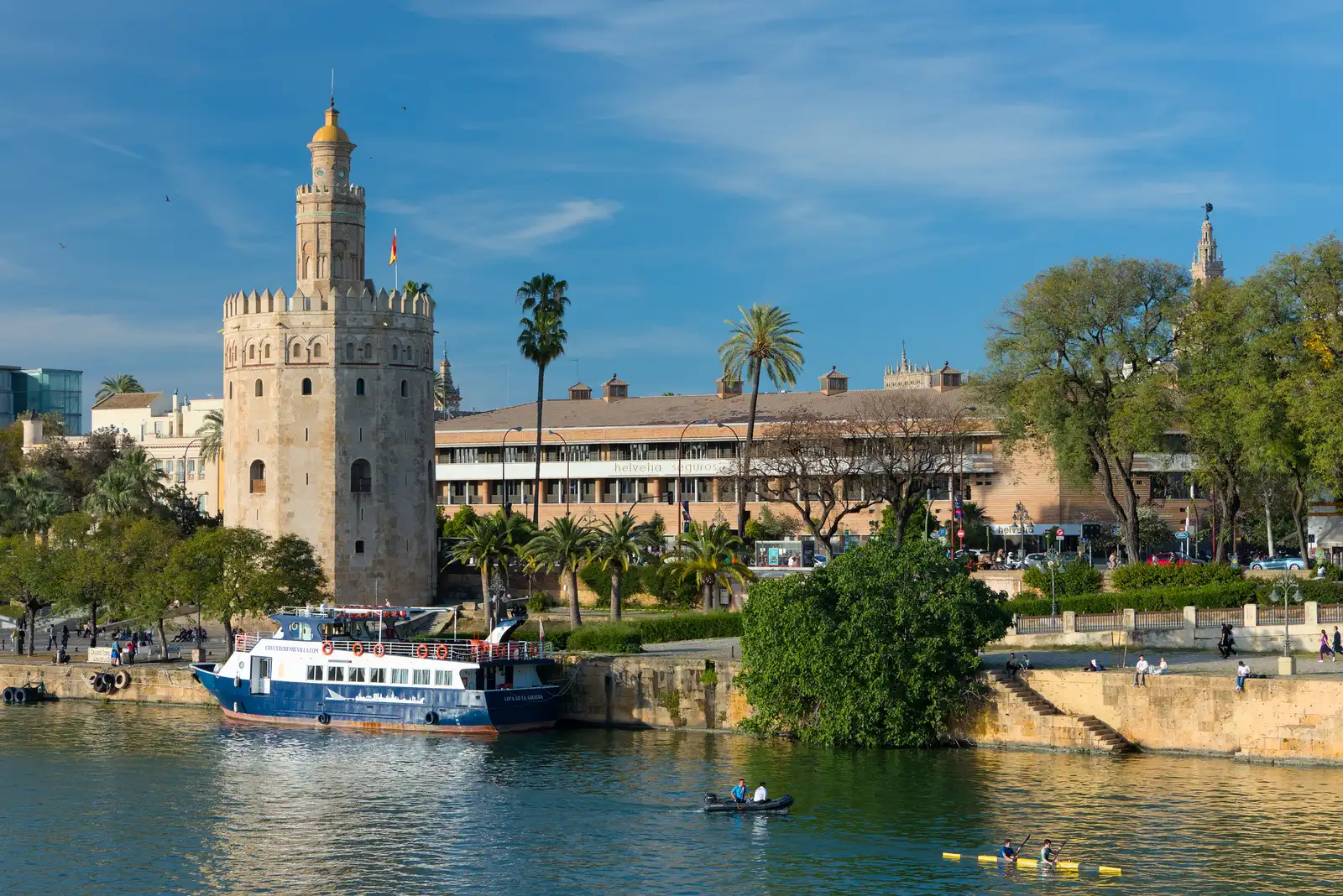
In the Arenal district stands the Real Maestranza bullring, one of the oldest in Spain. On the riverbank, the Torre del Oro recalls the city's Moorish past. The promenade is a good place for a break after a long day.
Alameda and the northern old town
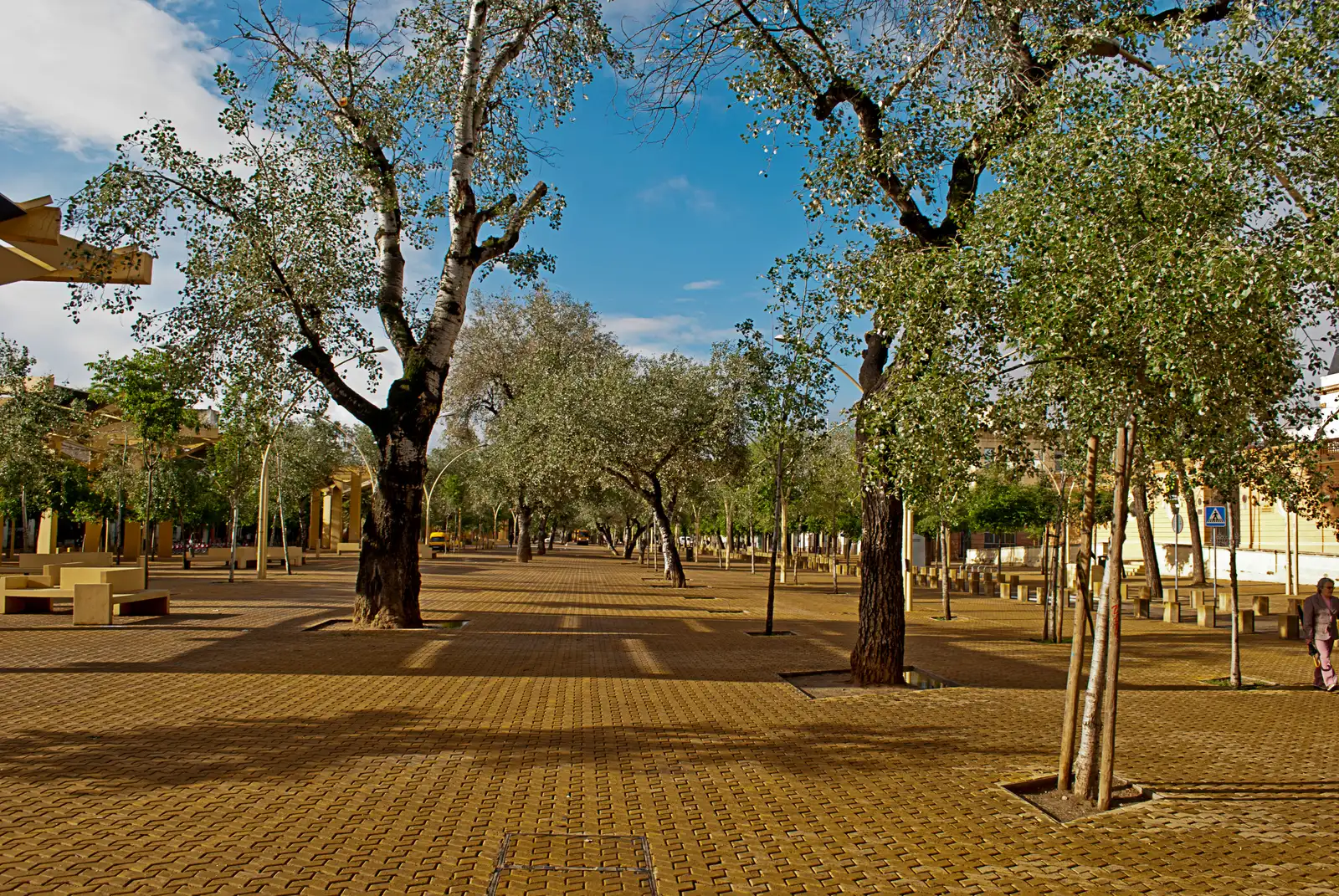
Around the Alameda de Hércules, Seville feels young and lively, with small bars, galleries and terraces. A little further north lie districts of churches and squares that see fewer visitors, where you can watch the city in everyday life.
Plaza de España and María Luisa Park
The semicircular square with bridges, tiled benches and a small canal was built for an exhibition in 1929. The neighbouring park invites you to rest in the shade. A visit is worthwhile at any hour, especially when it is hot outside.
When and how
Seville is very hot in summer, so it pays to schedule walks for early morning or evening. At midday many locals take a break and shops close. The districts lie so close together that you can link them on foot, and bicycles make a pleasant addition. Eating means small tapas, tried from bar to bar. Wear a hat and sun cream, and drink plenty of water. In spring, when the orange trees blossom, the scent in the lanes is especially lovely.
Every district of Seville is worth a visit. If you have little time, choose two areas and give them room: that beats rushing through everything. Combine sightseeing with breaks in the shade, because the rhythm of the city is slow and relaxed. Sit down on a square, order a drink and watch the world go by. That is how you notice what sets the districts apart: the sounds, the smells and the way people spend their day.
Nonstop to Seville
Nonstop flights there leave from these airports, among others: Dublin Airport, Alicante-Elche Miguel Hernández Airport and Almería Airport.
- Dublin Airport (DUB)Aer Lingus, Ryanair · year-roundFind parking at this airport
- Alicante-Elche Miguel Hernández Airport (ALC)Ryanair · year-roundFind parking at this airport
- Almería Airport (LEI)Iberia · year-roundFind parking at this airport
- Amsterdam Airport Schiphol (AMS)Transavia, easyJet · year-roundFind parking at this airport
- EuroAirport Basel-Mulhouse-Freiburg (BSL)easyJet · year-roundFind parking at this airport
- Kraków John Paul II International Airport (KRK)Ryanair · year-roundFind parking at this airport
52 more departure airports
- Josep Tarradellas Barcelona-El Prat Airport (BCN)Ryanair, Vueling · year-roundFind parking at this airport
- Beauvais-Tillé airport (BVA)Ryanair · year-roundFind parking at this airport
- Bilbao Airport (BIO)Volotea, Vueling · year-roundFind parking at this airport
- Bologna Guglielmo Marconi Airport (BLQ)Ryanair · year-roundFind parking at this airport
- Bordeaux-Mérignac Airport (BOD)Transavia, Volotea · year-roundFind parking at this airport
- Cagliari Elmas Airport (CAG)Ryanair · year-roundFind parking at this airport
- Verona Villafranca Valerio Catullo Airport (VRN)Volotea · year-roundFind parking at this airport
- Turin Airport (TRN)Ryanair · year-roundFind parking at this airport
- Catania-Fontanarossa Airport (CTA)Ryanair · year-roundFind parking at this airport
- Brussels South Charleroi Airport (CRL)Ryanair · year-roundFind parking at this airport
- Lyon Saint-Exupéry Airport (LYS)Transavia, easyJet · year-roundFind parking at this airport
- Düsseldorf Airport (DUS)Eurowings · year-roundFind parking at this airport
- Eindhoven Airport (EIN)Ryanair · year-roundFind parking at this airport
- Milan Malpensa International Airport (MXP)Ryanair, Wizz Air, easyJet · year-roundFind parking at this airport
- Frankfurt Main Airport (FRA)Lufthansa · year-roundFind parking at this airport
- Hamburg Helmut Schmidt Airport (HAM)easyJet · year-roundFind parking at this airport
- Ibiza Airport (IBZ)Ryanair, Vueling · year-roundFind parking at this airport
- Cologne Bonn Airport (CGN)Ryanair · year-roundFind parking at this airport
- Lisbon Humberto Delgado Airport (LIS)Ryanair, TAP Air Portugal · year-roundFind parking at this airport
- Maastricht Aachen Airport (MST)Transavia · year-roundFind parking at this airport
- Adolfo Suárez Madrid-Barajas Airport (MAD)Air Europa, Iberia · year-roundFind parking at this airport
- Marseille Provence Airport (MRS)Ryanair, Transavia · year-roundFind parking at this airport
- Munich Airport (MUC)Lufthansa City Airlines · year-roundFind parking at this airport
- Nantes Atlantique Airport (NTE)Ryanair, Transavia · year-roundFind parking at this airport
- Naples International Airport (NAP)Ryanair · year-roundFind parking at this airport
- Nuremberg Airport (NUE)Ryanair · year-roundFind parking at this airport
- Il Caravaggio International Airport (BGY)Ryanair · year-roundFind parking at this airport
- Bucharest Henri Coandă International Airport (OTP)Wizz Air · year-roundFind parking at this airport
- Palma de Mallorca Airport (PMI)Ryanair, Vueling · year-roundFind parking at this airport
- Paris-Orly Airport (ORY)Transavia, Vueling · year-roundFind parking at this airport
- Charles de Gaulle International Airport (CDG)Air France, Vueling · year-roundFind parking at this airport
- Pisa International Airport (PSA)Ryanair · year-roundFind parking at this airport
- Francisco de Sá Carneiro Airport (OPO)Ryanair · year-roundFind parking at this airport
- Václav Havel Airport Prague (PRG)Ryanair · year-roundFind parking at this airport
- Karlsruhe Baden-Baden Airport (FKB)Ryanair · year-roundFind parking at this airport
- Rome-Fiumicino Leonardo da Vinci International Airport (FCO)Ryanair, Wizz Air · year-roundFind parking at this airport
- Rotterdam The Hague Airport (RTM)Transavia · year-roundFind parking at this airport
- Santiago-Rosalía de Castro Airport (SCQ)Vueling · year-roundFind parking at this airport
- Treviso Airport (TSF)Ryanair · year-roundFind parking at this airport
- Valencia Airport (VLC)Ryanair, Vueling · year-roundFind parking at this airport
- Venice Marco Polo Airport (VCE)Ryanair, Wizz Air · year-roundFind parking at this airport
- Warsaw Chopin Airport (WAW)Ryanair, Wizz Air · year-roundFind parking at this airport
- Copernicus Wrocław Airport (WRO)Ryanair · year-roundFind parking at this airport
- Bari Karol Wojtyła International Airport (BRI)Ryanair · seasonalFind parking at this airport
- Berlin Brandenburg Airport (BER)easyJet · seasonalFind parking at this airport
- Florence Airport, Peretola (FLR)Volotea · seasonalFind parking at this airport
- Lille Airport (LIL)Volotea · seasonalFind parking at this airport
- Olbia Costa Smeralda Airport (OLB)Volotea · seasonalFind parking at this airport
- Athens Eleftherios Venizelos International Airport (ATH)Aegean Airlines · seasonalFind parking at this airport
- Stockholm-Arlanda Airport (ARN)Scandinavian Airlines · seasonalFind parking at this airport
- Vienna International Airport (VIE)Austrian Airlines · seasonalFind parking at this airport
- Brussels Airport (BRU)Transavia · seasonalFind parking at this airport
Routes as listed on Wikipedia from the airlines' schedules; the airline's current timetable is authoritative.